
The Future is in Focus: Nurturing Innovation and Collaboration in Pediatric Liver Transplantation
The WebApp is sponsored by: 
Feeding the flame, one day at a time: design of a serious game to support medication adherence and education for pediatric liver transplant patients
Lucy Shang1, Amrita Narang1, Ellen Wang1, Thomas Caruso1, Kenny Roy1, Maria Menendez1, Samuel Rodriguez1.
1Stanford University School of Medicine, Palo Alto, CA, United States
The Stanford CHARIOT Lab.
Introduction
Medication nonadherence is a major contributor to graft loss and morbidity in pediatric liver transplant recipients. With a median transplant age of 2 years, many patients lack recall of their transplant and understanding of lifelong immunosuppression, compounded by stigma, reduced self-efficacy, and disengagement from health education.1 Serious games – digital interventions beyond entertainment – offer an engaging, developmentally appropriate method for health education.
Methods
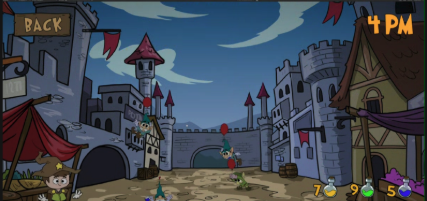
Our team of pediatric transplant hepatologists, pediatric anesthesiologists, and designers developed “Mystic Wizards”, a tablet-based serious game for pediatric transplant patients grounded in serious game design, social cognitive theory, and narrative medicine. Players assume the role of a wizard entrusted with a “Legacy Flame” representing their transplanted organ who must take daily “potions” to maintain strength and stability. Game mechanics reinforce medication timing, consistency, and identity reframing of surgical scars as sources of power.
Results
“Mystic Wizards” integrates narrative progression, mini-games, and customizable avatars to align education with engagement and empowerment goals. Story-driven prompts and character dialogue utilize metaphor-based learning to reinforce daily medication routines (e.g., “Time to power up – can’t face the day on an empty charge”) and highlight the relationship between consistency and strength. Visual cues, including the brightness and stability of the Legacy Flame, provide immediate feedback on routine adherence, while non-punitive setbacks emphasize perseverance rather than failure.
Conclusion
“Mystic Wizards” demonstrates a theory-driven approach to serious game development for pediatric transplant care. Next steps include pilot implementation to assess feasibility, engagement, and potential impact on medication knowledge, adherence behaviors, and self-efficacy.



Email: info@splitmeeting.org
If you have any questions during the meeting, please go to the registration desk. Our emails will be monitored sporadically.
REGISTRATION DESK OPENING TIMES