
The Future is in Focus: Nurturing Innovation and Collaboration in Pediatric Liver Transplantation
The WebApp is sponsored by: 
Social Determinants of Health in Pediatric Metabolic Dysfunction-Associated Steatotic Liver Disease: Utilizing the Childhood Opportunity Index (COI)
Amber Gafur1, Zil Shah3, Aamna Hafeez2, Patricio Arias1, Zhide Fang4, Michael Carver1.
1Department of Gastroenterology, Hepatology, and Nutrition, LSU Health Science Center/Manning Family Children's Hospital, New Orleans, LA, United States; 2Department of Pediatrics, LSU Health Science Center/Manning Family Children's Hospital, New Orleans, LA, United States; 3Department of Pediatrics, Tulane University/Manning Family Children's Hospital, New Orleans, LA, United States; 4Department of Biostatistics , LSU Health Science Center, New Orleans, LA, United States
Objectives: The study aim is to investigate whether the presence and severity of metabolic dysfunction associated liver disease, or MASLD, has a place-based relationship by utilizing the Childhood Opportunity Index (COI). COI is a composite measure designed to evaluate neighborhood conditions that influence children’s health and long-term outcomes and provides a comprehensive assessment on the built, social, economic, and educational aspects of a child’s environment.
Methods: This is a single-center retrospective cohort study completed at a large, freestanding children's hospital in the southeastern United States. A retrospective chart review was conducted using electronic medical records. Patients were sorted into one of five COI Index categories based on their home address at time of visit: very low, low, moderate, high, or very high. The study population included all children aged 5 through 17 years old with ICD diagnosis of fatty liver or MASLD seen between March 1, 2018, and July 31st, 2024. Patients will be excluded if they have any other suspected etiology of elevated liver enzymes. Data was analyzed by a statistician to determine if any significant findings were present amongst single and continuous variables such as including COI category, race, gender, insurance type, primary language, A1C, lipid panel, TSH, BMI, age of diagnosis, or ALT.
Results: Overall, 870 charts were reviewed, and 441 patients met inclusion criteria. The primary significant finding was that there was a large predominance of patients in very low and low COI categories with distribution as follows: Very Low 121 (27%), Low 168 (38%), Moderate 105 (24%), High 30 (7%), and Very High 17 (4%). The average age of diagnosis of MASLD was 12.6 years old and did not vary amongst COI categories. The average BMI amongst all patients was 97.04 with median inter-quartile range noted at 99.2. Other metabolic markers (A1C, TSH, lipid panel) were also measured with lipid panel being the only significant lab available in a large portion of the population study and demonstrated results as follows: Normal 135 (38%), Abnormal 215 (62%), and No Sample 91, demonstrating a prevalence of dyslipidemia amongst patients diagnosed with MASLD.
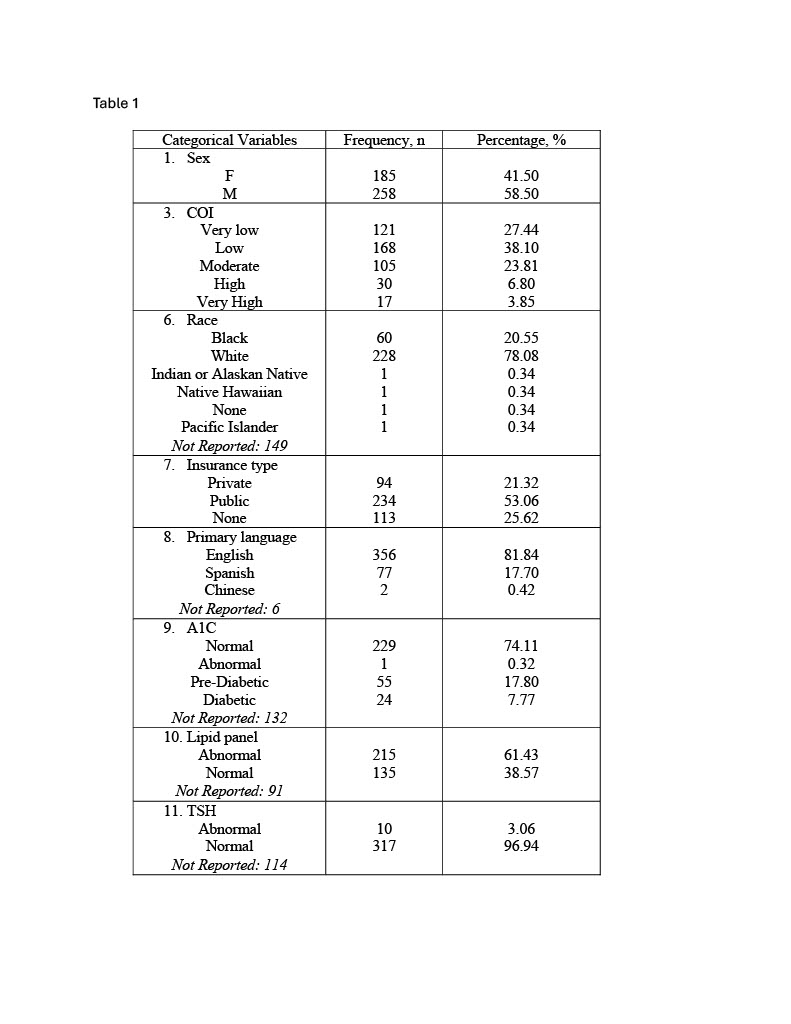
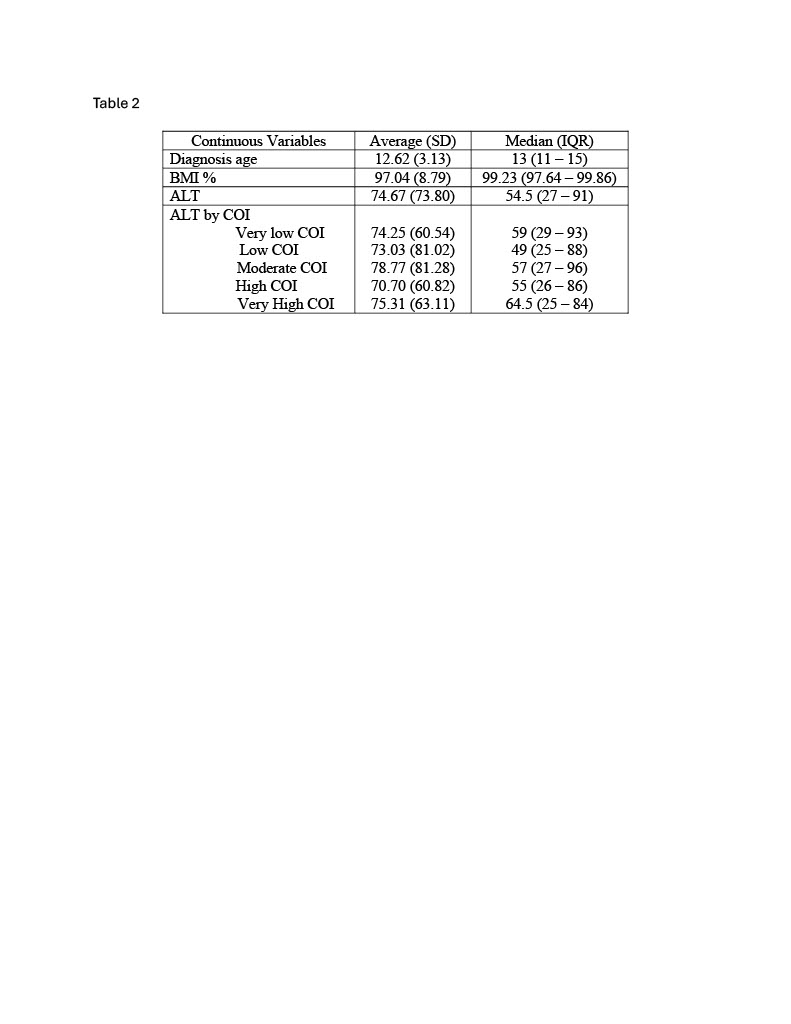
Discussion: This retrospective review highlights a significant association between lower COI categories and an increased prevalence of MASLD in children. The findings emphasize the need for public health policies that address the underlying social and environmental factors contributing to pediatric metabolic diseases. By focusing on improving childhood opportunities in disadvantaged communities, we can reduce the burden of MASLD and other related conditions in vulnerable pediatric populations.



Email: info@splitmeeting.org
If you have any questions during the meeting, please go to the registration desk. Our emails will be monitored sporadically.
REGISTRATION DESK OPENING TIMES