
The Future is in Focus: Nurturing Innovation and Collaboration in Pediatric Liver Transplantation
The WebApp is sponsored by: 
The survival benefit of pediatric liver transplantation
Ali Abbasi1, Hillary Braun1, Bo Kang2, Emily Perito3, Sang-Mo Kang1.
1Department of Surgery, University of California, San Francisco, San Francisco, CA, United States; 2McMaster University, Hamilton, ON, Canada; 3Department of Pediatrics, University of California, San Francisco, San Francisco, CA, United States
Purpose: The anticipated survival benefit of liver transplantation (LT) is an important factor guiding transplant eligibility and organ allocation policies. The true survival benefit of pediatric LT remains poorly characterized due to limited follow-up data beyond the 30-year time horizon spanning the modern era of LT. Here, we propose a novel approach to simulate the absolute survival benefit of pediatric LT by estimating recipient survival beyond the observed time window.
Methods: We analyzed 260,121 adult and 20,755 pediatric patients listed for first LT in the UNOS STAR files (1990-2024). To extend survival estimates beyond observed data, we calculated age-specific mortality rates for LT recipients who survived at least 2 years after transplant. Using these mortality rates, we simulated the long-term survival of pediatric LT recipients and used propensity score matching to generate a control group who were waitlisted, but not transplanted. The average survival benefit was defined as difference in restricted mean survival time until age 90 between LT recipients and controls, which represents the area between their Kaplan-Meier curves.
Results: The survival benefit of LT in the UNOS data was 9.9 years for adult and 13.6 years for pediatric LT recipients (Figure 1a). Simulating survival beyond the observed data increased the survival benefit to 33.7 years for pediatric LT recipients (Figure 1b).
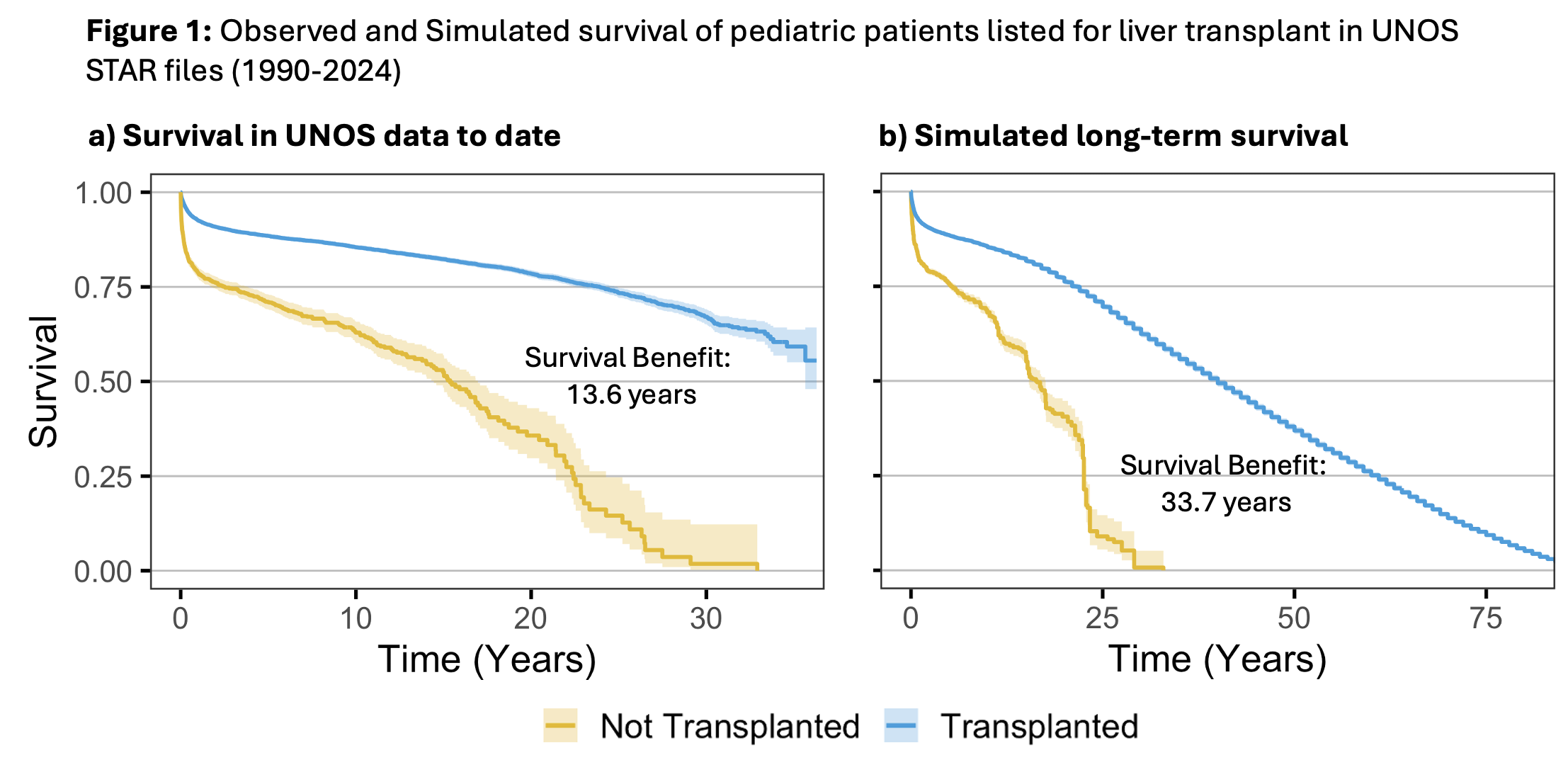
Conclusions: The true survival benefit of pediatric LT is far greater than previously estimated, because children who survive the perioperative period have excellent long term survival. These findings could justify expanded access to pediatric LT.



Email: info@splitmeeting.org
If you have any questions during the meeting, please go to the registration desk. Our emails will be monitored sporadically.
REGISTRATION DESK OPENING TIMES